Agents & Tools
AI agents and tools are where the technology meets real work: coding assistants, autonomous agents, chatbots, writing and image tools, and the frameworks that let them act on your behalf. This section reviews and explains the products you can actually use today — and the new ones worth watching.
For each tool we look at what it does well, where it falls short, how it's priced and who it's really for, so you can tell a genuine productivity boost from a demo that doesn't survive contact with real tasks. We follow assistants like ChatGPT, Claude and Gemini, coding agents such as Codex and Claude Code, and the rising wave of task‑specific and open‑source tools.
Whether you're a developer wiring agents into a workflow or a team picking your first AI assistant, this is where to compare options. Below you'll find reviews and guides to AI agents and tools.

No-Code AI Agent Builders in 2026: Can You Ship an Agent Without a Developer?
No-code agent builders have gone from demo toys to genuinely useful in 2026. Here is what a non-developer can actually ship — a lead qualifier, a research assistant, an internal helpdesk agent — the tool categories to choose from, a side-by-side comparison, and the honest points where you will still need a developer.

Browser-Using AI Agents Explained: What They Can Do and Where They Break
Browser-using agents can read a web page, decide what to click, and complete real multi-step tasks — booking, filling forms, pulling data. Here's how they actually work, where they shine, and the failure modes you need to plan around before you trust one with anything that matters.

LangGraph vs CrewAI vs AutoGen: Which AI Agent Framework Should You Use?
Three frameworks dominate agent-building in 2026 — and they think about the problem in very different ways. Here's a practical, vendor-neutral guide to LangGraph, CrewAI, and AutoGen: their mental models, honest tradeoffs, and how to pick one for your next project.

What Is MCP (Model Context Protocol) and Why It's Becoming the USB-C of AI Tools
Every AI assistant used to need its own custom plumbing to reach your CRM, docs, or database. The Model Context Protocol changes that with one open standard for connecting AI apps to tools and data — here's how it works and where the sharp edges are.
AI Agents on Your Own VPS: OpenClaw, Hermes, Paperclip and Hostinger's Docker Catalog
Agents, automations and self-hosting aren't the same. How Hostinger's OpenClaw, Hermes, Paperclip and 650+ Docker catalog map across the managed-to-DIY ladder.
Hostinger Managed Hermes Agent: A Personal AI Agent on Your Server, No Setup
A personal AI agent running on your own server — without the server admin. What 'managed' changes, what Hermes does, and managed vs self-managed VPS.
Hostinger Kodee: The AI That No Longer Just Advises — It Does the Admin
Kodee went from chatbot to agent — 350+ admin actions, 83% of support handled. What the chatbot-to-agent shift means for your hosting.

Tidio’s Lyro resolves 67% of conversations on average — what that number is actually measuring
Tidio puts Lyro’s average resolution rate at 67%, which is the figure that separates an AI agent from a live chat widget. But a resolution rate is mostly a property of your support content, not of the model — and that determines whether you land above or well below the average.
10 Chatbot Mistakes That Make Customers Leave
The technology is rarely why customers abandon a chatbot — the design choices are. This listicle covers ten common mistakes, from aggressive pop-ups and no human option to confidently wrong answers, and what to do instead.
What Are Chatbot Fallbacks and Why Do They Matter?
Every chatbot eventually hits a question it cannot answer. This explainer covers what fallbacks are, why good fallback design protects the customer experience, and how to escalate gracefully instead of looping endlessly.
How to Test an AI Chatbot Before Launch
A chatbot that shines in a demo can break with real customers. This how-to walks through testing edge cases, hallucinations, policy answers, escalation, integrations, and analytics — then validating with a small live pilot.
How to Train a Chatbot for Lead Qualification
A chatbot can qualify leads before sales ever gets involved. This how-to covers defining a qualified lead, asking conversational questions, scoring answers, mapping them to CRM fields, booking meetings, and handing off cleanly.
How to Write Chatbot Welcome Messages That Convert Without Annoying Visitors
The welcome message sets the tone for every chatbot conversation. This how-to shows what to say, when to trigger it, and how to match the opener to SaaS, e-commerce, local services, support, and booking — without irritating visitors.
AI Chatbots for E-Commerce: From Product Questions to Checkout Assistance
E-commerce chatbots now span the whole journey, from product discovery to checkout and post-purchase support. See how they guide selling, answer shipping and returns, recover carts, and upsell — without annoying shoppers.
AI Glossary for Beginners: 50 Terms You Need to Know
New to AI and lost in the jargon? This plain-English glossary defines 50 essential terms, grouped by topic, from machine learning and tokens to RAG, agents, and alignment. Read it through or use it as a reference.
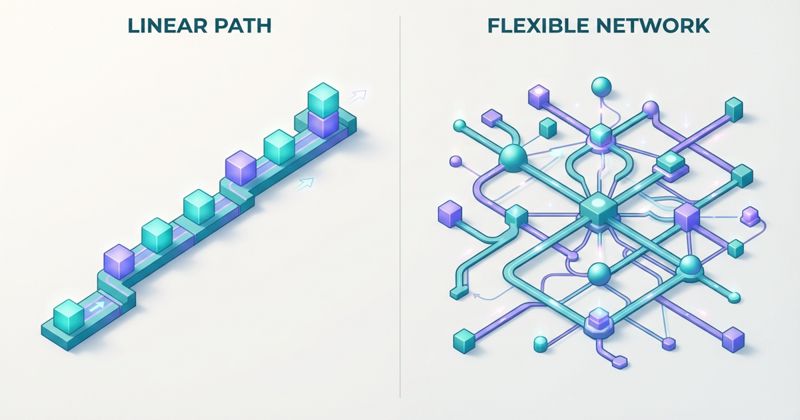
No-Code Builders vs n8n: When a Visual Automation Tool Beats a Pure Agent Builder
No-code agent builders ship a working assistant in an hour — until your requirements outgrow the guided flow. Where the line sits between a pure no-code builder, a flexible tool like n8n, and a code-first framework.
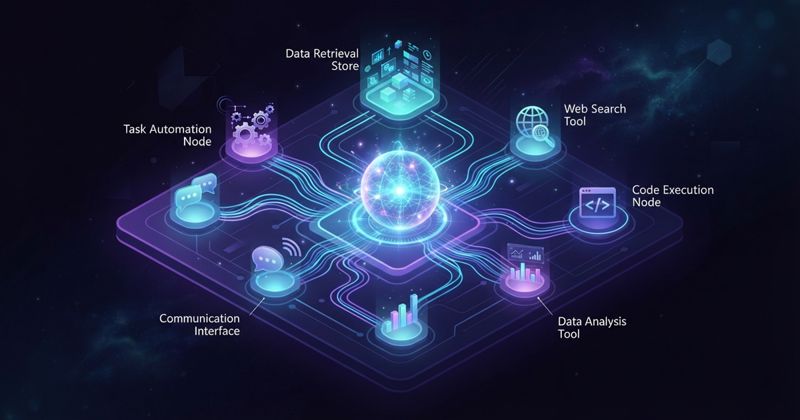
n8n for AI-Agent Workflows: Orchestrating Agents, Tools, and RAG Visually
A single clever prompt is easy; a reliable agent that calls tools, answers from your data, and survives production is not. How n8n's visual canvas became a practical way to orchestrate AI agents, tool calls, and RAG.
Best AI Tools for Small Business Teams in 2026
Small teams need the right AI tool for each job, not one do-everything app. This guide groups well-known tools by use case — writing, support, meetings, coding, automation, design, research — so you can match category to task.
What Is an AI Agent? Chatbots, Assistants, and Autonomous Workflows Explained
Everything gets called an AI agent now. This explainer separates a chatbot that only answers from an assistant that uses tools and an agent that plans, acts, and completes tasks on its own.

AI Video Tools Are Going Mainstream: What Creators and Brands Should Watch
AI video generation, editing, and dubbing are now part of real content workflows. Here is what creators and brands should watch: disclosure, watermarking, and provenance.
AI Agents Are Moving From Chat Windows to Real Workflows
Chat windows were just the beginning. AI agents now run code, call tools, handle tickets, and automate internal operations. Here is what is actually changing and where it breaks.

Lumo 2.0 Review: Proton's Private AI Assistant Grows Up
Proton rebuilt Lumo, its no-logs AI assistant: Lumo 2.0 is multimodal, much faster, searches the live web with citations, adds memory and a business tier — and still keeps every chat and image zero-access encrypted. Our review.
Chatbot Templates for Lead Generation, Support, Booking, and E-Commerce
Most business bots solve the same four problems. Reusable chatbot templates and conversation steps for lead gen, support, booking, and e-commerce.
Chatbot Launch Checklist: 30 Things to Test Before Going Live
Before your chatbot meets real users, test it the way they will. A grouped 30-point checklist covering content, fallbacks, forms, integrations, and privacy.
Best AI Chatbot Platforms for Small Businesses in 2026
There's no single best chatbot platform — only the best fit for your channel and team. A category-by-category comparison of well-known tools for SMBs.
Omnichannel Chatbots Explained: Website, WhatsApp, Messenger, Email, and Voice
One chatbot, many channels. How website chat, WhatsApp, Messenger, email, and voice differ — and what shared history and clean handoff actually require.
What Are Intents, Entities, and Context in Chatbot Design?
Intents, entities, and context are the building blocks of chatbot understanding. Here's what each one means and why they still matter for AI agents.
What Is a Chatbot in 2026?
The word chatbot now spans scripted menus to autonomous agents. Here is how rule-based bots, AI chatbots, RAG bots, voice bots, and AI agents actually differ.
How to Set Human Handoff Rules for an AI Chatbot
A chatbot earns trust by knowing when to step aside. Learn which cases should trigger a human handoff and how to transfer context cleanly to the right agent.
How to Connect a Chatbot to Your Knowledge Base
Linking a chatbot to your docs is a pipeline, not a switch. Walk through document cleanup, chunking and indexing, permissions, retrieval tuning, citations, and updates.
How to Reduce AI Chatbot Hallucinations
AI chatbots invent confident but wrong answers. Learn a layered fix: grounding, RAG, clean sources, refusal behavior, citations, and continuous testing.
How to Build a Customer Support Chatbot Flow From Scratch
A working support bot starts with a map, not a model. This step-by-step guide covers intents, FAQs, knowledge base, escalation paths, testing, and launch metrics.
Human Handoff Is Back: Why Better Bots Still Need Clear Escalation
As AI resolves more, the cases that reach a human get harder, so escalation matters more. Why handoff is a feature to design, not a failure to tolerate.

Marketing Miner Brings Real Market Data to ChatGPT and Claude with MCP
Marketing Miner launched an MCP integration that connects ChatGPT and Claude to its real keyword, competitor, and traffic data — so your AI assistant grounds marketing work in hard numbers instead of guesses.
How to Safely Let an AI Agent Touch Your Codebase
An AI coding agent is useful right up until it has broad permissions and your real secrets. A practical workflow: read-only first, isolated branch, sandboxed execution, least privilege, no production secrets, and tests plus human review before anything merges.
Voice AI in Customer Service: Is the Call Center Finally Changing?
Voice AI can now hold a real spoken conversation on a support line. The breakthrough is the pipeline, not the voice. Here are the hard parts that decide if it works.
Agentic Commerce Is Here: Buying Inside AI Chats with Shopify
Shopify Spring '26 makes products buyable inside ChatGPT, Copilot and Google AI Mode. Here's what Shopify Catalog and the Universal Commerce Protocol actually do.
AI Agents vs Chatbots: Why Customer Support Automation Is Getting More Powerful
Chatbots answer questions; AI agents take action and resolve tickets across your systems. Here is what changed, why it matters, and where humans still belong.
CustomGPT's Enterprise Agent Now Plans and Acts — Not Just Answers
CustomGPT.ai shipped its biggest update: an Enterprise Agent that plans multi-step tasks and executes them — building deliverables and connecting to your tools, on a citation-backed anti-hallucination core.
Higgsfield AI Review: Cinematic AI Video With Real Camera Control
Higgsfield bundles top AI video and image models (Sora 2, Veo 3.1, Kling) under one subscription and layers on 70+ camera presets and VFX. We review what it does well, the credit-cost catch, pricing, and who it's actually for.
OpenAI Acquires Ona: Persistent Cloud Workspaces for Codex Agents
OpenAI has announced the acquisition of Ona to give Codex secure, persistent, customer-controlled cloud environments for its coding agents. The deal is a clear signal that AI agents are moving away from short, one-shot prompts toward work that runs for hours or even days. For developers and engineering managers, it shifts the conversation from "how good is the model" to "how do we govern an agent that has its own workspace, tools, and time." The era of the long-running agent has an infrastructure problem, and OpenAI just bought a piece of the answer.