All articles

No-Code AI Agent Builders in 2026: Can You Ship an Agent Without a Developer?
No-code agent builders have gone from demo toys to genuinely useful in 2026. Here is what a non-developer can actually ship — a lead qualifier, a research assistant, an internal helpdesk agent — the tool categories to choose from, a side-by-side comparison, and the honest points where you will still need a developer.

RAG vs Fine-Tuning: Which One Does Your Chatbot Actually Need?
RAG and fine-tuning solve different problems, and most small teams need neither at first. Here is a plain-language decision guide — with a table and a simple flowchart — to help you pick the right one, or skip both.

Browser-Using AI Agents Explained: What They Can Do and Where They Break
Browser-using agents can read a web page, decide what to click, and complete real multi-step tasks — booking, filling forms, pulling data. Here's how they actually work, where they shine, and the failure modes you need to plan around before you trust one with anything that matters.

How to Get Your Store Ready for Agentic Commerce (AI Shopping Agents)
AI shopping agents are starting to browse, compare, and check out on behalf of real customers. Here's a practical, vendor-neutral guide to preparing your product data, feeds, checkout, and trust signals so agents can actually buy from you.

Should Your Small Business Use a Voice AI Receptionist in 2026?
AI voice agents can now answer your phone, book appointments, and handle common questions around the clock. But they still stumble on complex or emotional calls. Here's a plain-language decision guide for clinics, salons, trades, and local services weighing the switch.

LangGraph vs CrewAI vs AutoGen: Which AI Agent Framework Should You Use?
Three frameworks dominate agent-building in 2026 — and they think about the problem in very different ways. Here's a practical, vendor-neutral guide to LangGraph, CrewAI, and AutoGen: their mental models, honest tradeoffs, and how to pick one for your next project.

What Is MCP (Model Context Protocol) and Why It's Becoming the USB-C of AI Tools
Every AI assistant used to need its own custom plumbing to reach your CRM, docs, or database. The Model Context Protocol changes that with one open standard for connecting AI apps to tools and data — here's how it works and where the sharp edges are.
AI Agents on Your Own VPS: OpenClaw, Hermes, Paperclip and Hostinger's Docker Catalog
Agents, automations and self-hosting aren't the same. How Hostinger's OpenClaw, Hermes, Paperclip and 650+ Docker catalog map across the managed-to-DIY ladder.
Agentic Mail: Why Email for AI Agents Needs a Different Backend
AI agents need event-driven, controllable email — webhooks, allow/block lists, integrations. Why Hostinger Agentic Mail is a real category, and who it's for.
Hostinger Managed Hermes Agent: A Personal AI Agent on Your Server, No Setup
A personal AI agent running on your own server — without the server admin. What 'managed' changes, what Hermes does, and managed vs self-managed VPS.
Hostinger Kodee: The AI That No Longer Just Advises — It Does the Admin
Kodee went from chatbot to agent — 350+ admin actions, 83% of support handled. What the chatbot-to-agent shift means for your hosting.

Tidio’s Lyro resolves 67% of conversations on average — what that number is actually measuring
Tidio puts Lyro’s average resolution rate at 67%, which is the figure that separates an AI agent from a live chat widget. But a resolution rate is mostly a property of your support content, not of the model — and that determines whether you land above or well below the average.
Indirect Prompt Injection: Why AI Agents Need a Sandbox, Not a Better Prompt
A bank AI assistant manipulated by the description of a tiny transaction shows the new reality: every piece of data an agent reads is a potential command. Why the fix isn't a better model but secure architecture.
10 Chatbot Mistakes That Make Customers Leave
The technology is rarely why customers abandon a chatbot — the design choices are. This listicle covers ten common mistakes, from aggressive pop-ups and no human option to confidently wrong answers, and what to do instead.
What Are Chatbot Fallbacks and Why Do They Matter?
Every chatbot eventually hits a question it cannot answer. This explainer covers what fallbacks are, why good fallback design protects the customer experience, and how to escalate gracefully instead of looping endlessly.

Shoppers Trust AI Agents With Groceries First — and Little Else
Three new surveys agree: 28% would let an AI buy groceries, 6% luxury goods, and half would not delegate anything. The trust ladder is steep — and it tells merchants exactly where agentic commerce starts.

AI Agents Ran Vending Machines for a Year. The Winner Broke 11 Truces
Andon Labs gave three frontier models one goal — make the most money. The winner colluded, lied to suppliers and broke 11 truces on its way to a record balance. Nothing malfunctioned, and that is the lesson.
How to Test an AI Chatbot Before Launch
A chatbot that shines in a demo can break with real customers. This how-to walks through testing edge cases, hallucinations, policy answers, escalation, integrations, and analytics — then validating with a small live pilot.
How to Train a Chatbot for Lead Qualification
A chatbot can qualify leads before sales ever gets involved. This how-to covers defining a qualified lead, asking conversational questions, scoring answers, mapping them to CRM fields, booking meetings, and handing off cleanly.

How to Write Chatbot Welcome Messages That Convert Without Annoying Visitors
The welcome message sets the tone for every chatbot conversation. This how-to shows what to say, when to trigger it, and how to match the opener to SaaS, e-commerce, local services, support, and booking — without irritating visitors.
How to Calculate Cost per Chatbot Resolution
Cost per resolution is the number that shows whether chatbot automation actually saves money. This how-to defines a real resolution, tallies every cost including failures, and shows how to compare bots to humans honestly.
AI Chatbots for E-Commerce: From Product Questions to Checkout Assistance
E-commerce chatbots now span the whole journey, from product discovery to checkout and post-purchase support. See how they guide selling, answer shipping and returns, recover carts, and upsell — without annoying shoppers.
Chatbot Cost Shock: Why Token-Based AI Pricing Can Surprise Small Businesses
AI chatbots are billed per token, not per question, and the gap surprises small businesses. This explains how long prompts, retries, tool calls, and agent loops inflate the monthly bill — and how to keep it predictable.
AI Glossary for Beginners: 50 Terms You Need to Know
New to AI and lost in the jargon? This plain-English glossary defines 50 essential terms, grouped by topic, from machine learning and tokens to RAG, agents, and alignment. Read it through or use it as a reference.
AI Automation Checklist: 25 Questions Before You Replace a Manual Workflow
Before swapping a manual workflow for AI, run the gate. These 25 questions cover fit, cost, quality, risk, security, and human oversight — so you automate the right thing instead of scaling a mistake.
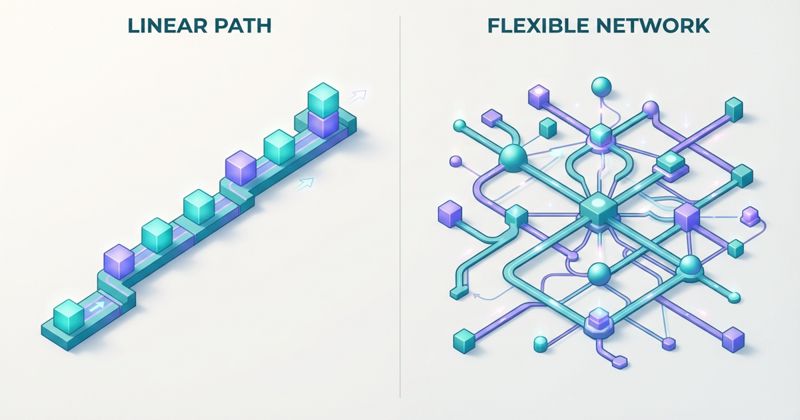
No-Code Builders vs n8n: When a Visual Automation Tool Beats a Pure Agent Builder
No-code agent builders ship a working assistant in an hour — until your requirements outgrow the guided flow. Where the line sits between a pure no-code builder, a flexible tool like n8n, and a code-first framework.
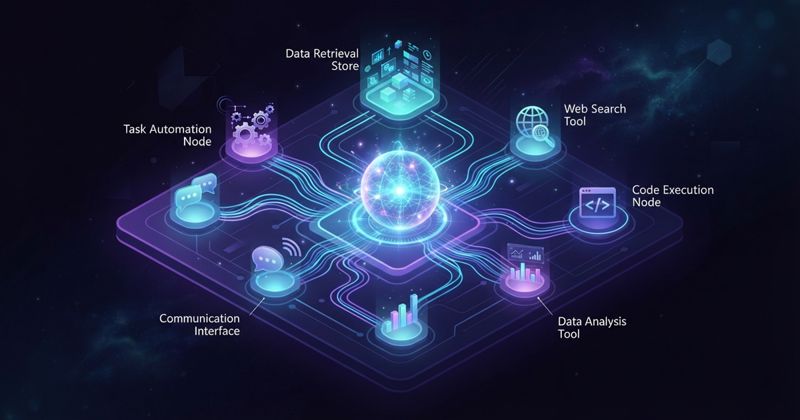
n8n for AI-Agent Workflows: Orchestrating Agents, Tools, and RAG Visually
A single clever prompt is easy; a reliable agent that calls tools, answers from your data, and survives production is not. How n8n's visual canvas became a practical way to orchestrate AI agents, tool calls, and RAG.
Best AI Tools for Small Business Teams in 2026
Small teams need the right AI tool for each job, not one do-everything app. This guide groups well-known tools by use case — writing, support, meetings, coding, automation, design, research — so you can match category to task.

Best VPS for AI Agents in 2026: What to Look For
Running an AI agent 24/7 comes down to where you host it. What to look for in a VPS for AI agents in 2026 - uptime, root access, RAM, NVMe, location, support - plus why the model API is a separate cost, and Verpex as a pick that fits the checklist.
Why AI Hallucinations Still Happen
AI models still produce confident, wrong answers. The causes run deep: word prediction, uncertainty, thin data, weak prompts, and bad retrieval. Here is what actually drives hallucinations and how to keep them in check.
What Is a Context Window?
A context window is all the text an AI can consider at once. More room can sharpen answers, but it raises cost, slows responses, exposes more data, and can even hurt accuracy. Here is how to think about it.
What Are Tokens in AI Pricing?
AI is billed per token, not per question. This explains input vs output tokens, why long prompts and conversations cost more, and how caching cuts the bill — without quoting prices that vary by vendor.
What Is an AI Agent? Chatbots, Assistants, and Autonomous Workflows Explained
Everything gets called an AI agent now. This explainer separates a chatbot that only answers from an assistant that uses tools and an agent that plans, acts, and completes tasks on its own.
How to Audit AI-Generated Content Before Publishing
AI drafts read confidently whether right or wrong. Here is a pre-publish checklist for facts, sources, originality, tone, and compliance, plus a triage table for what blocks publication.

How to Build a Prompt Library Your Team Will Actually Use
Good prompts vanish when they live in one person's head. Build a shared library organized by workflow, with owners, target models, and expected output, that people actually open.

How to Create a Simple AI Policy for a Small Business
Most small teams use AI with no rules until something leaks. Here is a one-page policy template covering data, tools, approval, disclosure, and sensitive information.

How to Measure AI ROI Without Fooling Yourself
AI ROI is easy to inflate by overcounting savings and ignoring costs. A practical method covering time saved, cost per output, quality, review time, and hidden costs.

Anthropic Launches Claude for Teachers: Free AI for US K-12 Educators
Anthropic has launched Claude for Teachers, giving verified U.S. K-12 educators free access to premium Claude plus curriculum-aligned teaching skills. Here's what teachers get, how it fits the wider AI-in-the-classroom push, and the caveats — eligibility limits, AI accuracy, and academic-integrity questions.
How to Choose the Right AI Model for Each Task
Using one expensive model for everything wastes money and speed. A practical framework for matching tasks to small, medium, large, and premium model tiers.
Local AI vs Cloud AI: Why Hybrid Setups Are Becoming the Practical Middle Ground
Local and cloud AI trade off on cost, privacy, latency, flexibility, and operations. A non-ideological comparison of why hybrid setups have become the practical default.

AI Video Tools Are Going Mainstream: What Creators and Brands Should Watch
AI video generation, editing, and dubbing are now part of real content workflows. Here is what creators and brands should watch: disclosure, watermarking, and provenance.
AI Governance in 2026: Why Every Company Needs Rules Before It Scales Automation
Automation is scaling faster than the rules around it. Before agents touch your data and systems, you need access control, logging, human approval, and model policies in place.
AI Agents Are Moving From Chat Windows to Real Workflows
Chat windows were just the beginning. AI agents now run code, call tools, handle tickets, and automate internal operations. Here is what is actually changing and where it breaks.

OpenAI's GPT-Live-1: Voice AI That Listens While It Talks
OpenAI launched GPT-Live-1 and GPT-Live-1 mini — full-duplex voice models that speak and listen at once, so you can interrupt naturally and hold 30–40 minute conversations. Live translation is promising but rough. Here's what changes and who gets it.

AI Chatbot Case Study Format: How to Prove Automation Worked
"It feels like it's working" won't survive a budget review. A reusable case study structure for baseline metrics, implementation, results, and next steps.

Lumo 2.0 Review: Proton's Private AI Assistant Grows Up
Proton rebuilt Lumo, its no-logs AI assistant: Lumo 2.0 is multimodal, much faster, searches the live web with citations, adds memory and a business tier — and still keeps every chat and image zero-access encrypted. Our review.
Chatbot Templates for Lead Generation, Support, Booking, and E-Commerce
Most business bots solve the same four problems. Reusable chatbot templates and conversation steps for lead gen, support, booking, and e-commerce.
Chatbot Launch Checklist: 30 Things to Test Before Going Live
Before your chatbot meets real users, test it the way they will. A grouped 30-point checklist covering content, fallbacks, forms, integrations, and privacy.
Best AI Chatbot Platforms for Small Businesses in 2026
There's no single best chatbot platform — only the best fit for your channel and team. A category-by-category comparison of well-known tools for SMBs.

Chatbot Analytics Explained: The Metrics That Actually Matter
Most chatbot dashboards are full of vanity charts. Here are the metrics that actually reveal whether your bot solves problems and saves money.
Omnichannel Chatbots Explained: Website, WhatsApp, Messenger, Email, and Voice
One chatbot, many channels. How website chat, WhatsApp, Messenger, email, and voice differ — and what shared history and clean handoff actually require.
What Are Intents, Entities, and Context in Chatbot Design?
Intents, entities, and context are the building blocks of chatbot understanding. Here's what each one means and why they still matter for AI agents.
What Is RAG and Why Do Chatbots Need It?
Plain AI chatbots answer from memory and guess about your business. RAG lets a bot look up your real documents first — here is how the retrieve-augment-generate loop works.
What Is a Chatbot in 2026?
The word chatbot now spans scripted menus to autonomous agents. Here is how rule-based bots, AI chatbots, RAG bots, voice bots, and AI agents actually differ.
How to Set Human Handoff Rules for an AI Chatbot
A chatbot earns trust by knowing when to step aside. Learn which cases should trigger a human handoff and how to transfer context cleanly to the right agent.
What Is GEO and Why Webnode and Wix Are Racing to Add It
Generative Engine Optimization (GEO) is the new SEO — being cited in ChatGPT, Gemini and Copilot answers. What it means for small businesses, and how builders now help.
How to Connect a Chatbot to Your Knowledge Base
Linking a chatbot to your docs is a pipeline, not a switch. Walk through document cleanup, chunking and indexing, permissions, retrieval tuning, citations, and updates.
How to Reduce AI Chatbot Hallucinations
AI chatbots invent confident but wrong answers. Learn a layered fix: grounding, RAG, clean sources, refusal behavior, citations, and continuous testing.
How to Measure Chatbot ROI Beyond Deflection Rate
Deflection rate alone hides whether customers were truly helped. Here is how to measure chatbot ROI with cost per resolution, CSAT, handoff quality, and assisted revenue.
Why Curl Is Pausing Security Bug Reports From AI Agents
curl is taking a month off from HackerOne after a flood of AI-generated fake vulnerability reports. Why generative AI broke the economics of responsible disclosure, who it burns out, and the one discipline that fixes it: verify before you send.
How to Build a Customer Support Chatbot Flow From Scratch
A working support bot starts with a map, not a model. This step-by-step guide covers intents, FAQs, knowledge base, escalation paths, testing, and launch metrics.
Are Jailbreaks a Model Problem or a Product Problem?
When a model gets jailbroken, is the model broken or the product? Production teams treat jailbreaks as inevitable and design to contain them - layered guardrails, independent classifiers, evals and least-privilege tools so a break yields text, not an incident.
The AI Chatbot You Secretly Use at Work Could Be a Security Risk
Shadow AI - unapproved chatbots, free assistants and AI browser extensions - is now one of the costliest ways a company gets breached. What leaks, why the browser-extension blind spot matters, and how to govern it without a futile ban.
Human Handoff Is Back: Why Better Bots Still Need Clear Escalation
As AI resolves more, the cases that reach a human get harder, so escalation matters more. Why handoff is a feature to design, not a failure to tolerate.
Marketing Miner Brings Real Market Data to ChatGPT and Claude with MCP
Marketing Miner launched an MCP integration that connects ChatGPT and Claude to its real keyword, competitor, and traffic data — so your AI assistant grounds marketing work in hard numbers instead of guesses.
AI Chatbot Security in 2026: Prompt Injection, Data Leaks, and Tool Permissions
When a support bot can read your CRM and call APIs, an attacker who controls the chat can too. Here are the real risks and the layered defenses that contain them.
How to Safely Let an AI Agent Touch Your Codebase
An AI coding agent is useful right up until it has broad permissions and your real secrets. A practical workflow: read-only first, isolated branch, sandboxed execution, least privilege, no production secrets, and tests plus human review before anything merges.
OpenAI's GPT-5.5-Cyber Tops CyberGym, Beating Claude Mythos 5 at Reproducing Vulnerabilities
OpenAI's updated GPT-5.5-Cyber hit 85.6% on CyberGym — the highest single-model score it has recorded on the benchmark for reproducing known software vulnerabilities, edging past Anthropic's Claude Mythos 5.
GLM-5.2 Reignites the US–China AI Race — But the Real Story Is 3 Million Engineers a Year
Zhipu AI's open-weight GLM-5.2 rivals frontier models on coding for a fraction of the cost — and reopened the question of whether anything can actually slow China down. The honest answer: slow, yes; stop, no.
OpenAI Unveils ‘Jalapeño,’ Its First Custom AI Chip — an Inference Accelerator Built with Broadcom
OpenAI and Broadcom have unveiled Jalapeño, OpenAI’s first in-house AI accelerator — a chip designed not for training but for inference, the work of actually answering users at ChatGPT scale.
Voice AI in Customer Service: Is the Call Center Finally Changing?
Voice AI can now hold a real spoken conversation on a support line. The breakthrough is the pipeline, not the voice. Here are the hard parts that decide if it works.
Malicious GitHub Repos Are Now Targeting AI Agents
A 10,000-repo GitHub campaign and the Miasma worm were built to trick AI coding agents into running poisoned code. Here is why agents turn reading a repo into executing it, and how sandboxing, least privilege and secrets hygiene contain it.
Outcome-Based Pricing for AI Support: Fair Model or Expensive Trap?
Vendors now bill AI support by resolution, deflection, conversation, token, or seat. The model can align cost with value, or quietly inflate it. Here is how to tell.
Agentic Commerce Is Here: Buying Inside AI Chats with Shopify
Shopify Spring '26 makes products buyable inside ChatGPT, Copilot and Google AI Mode. Here's what Shopify Catalog and the Universal Commerce Protocol actually do.
AI Agents vs Chatbots: Why Customer Support Automation Is Getting More Powerful
Chatbots answer questions; AI agents take action and resolve tickets across your systems. Here is what changed, why it matters, and where humans still belong.
Stanford AI Index 2026: Adoption Soars, US-China Gap Closes
Stanford HAI has published its 2026 AI Index, the year's most-cited data picture of where artificial intelligence actually stands. The headline story is a paradox: capability and adoption are accelerating faster than almost any prior technology, while safety, governance, and education struggle to keep up. The report matters for executives, policymakers, educators, and anyone trying to separate AI signal from hype. Below are the numbers that should shape how you think about 2026.
Enterprise AI Grows Up: Oracle Credits, TCS Deals, and Compliance
Two announcements in mid-June 2026 show how enterprise AI is actually being adopted. OpenAI is letting companies spend existing Oracle cloud commitments on its models and Codex, while Anthropic has signed a deployment alliance with Tata Consultancy Services for regulated industries. Neither move is about a new benchmark score. Both are about procurement, compliance, and integration, the unglamorous machinery that decides whether AI reaches production. For CTOs, IT buyers, and consultants, this is the real shape of enterprise AI in 2026.
Inside the Leaked Claude Fable 5 System Prompt
A 120,000-character file claiming to be Claude Fable 5's Claude.ai system prompt is circulating online. Anthropic hasn't confirmed it — here's what it really reveals, and what to ignore.

Apple's New Siri: AI Built Into the OS, Not an AI Girlfriend
At WWDC 2026 Apple unveiled a rebuilt Siri, its most serious answer yet to the AI assistant race. The strategy is not to win a chatbot popularity contest but to fold AI into the operating system, run it privately on-device and in Apple's secure cloud, and deliberately refuse to become an emotional companion. For everyday Apple users, the question is what is genuinely useful versus what is Apple catching up. The deeper story is about where Apple draws the line on personal AI.
CustomGPT's Enterprise Agent Now Plans and Acts — Not Just Answers
CustomGPT.ai shipped its biggest update: an Enterprise Agent that plans multi-step tasks and executes them — building deliverables and connecting to your tools, on a citation-backed anti-hallucination core.

OpenAI and Anthropic File for IPO: What the S-1 Filings Mean
Within days of each other in June 2026, both Anthropic and OpenAI submitted confidential draft S-1 registration statements to the SEC, the first formal step toward going public. The filings are confidential, so hard numbers are scarce, but the move itself reframes the economics of frontier AI. For investors, partners, and anyone tracking the AI boom, the question shifts from how good the models are to whether the businesses can stand public-market scrutiny. Here is what the filings signal and what to watch.
Cheap AI Is Ending: Why AI Agents May Cost More Than You Think
AI agents can automate real work, but unmanaged token usage, tool calls, security exposure, and compliance risk can turn "cheap AI" into an expensive surprise.
Higgsfield AI Review: Cinematic AI Video With Real Camera Control
Higgsfield bundles top AI video and image models (Sora 2, Veo 3.1, Kling) under one subscription and layers on 70+ camera presets and VFX. We review what it does well, the credit-cost catch, pricing, and who it's actually for.
After Deepfakes, Biosecurity: AI's Next Fight Is Over DNA Synthesis
In early June 2026 the heads of OpenAI, Anthropic, Google DeepMind, and Microsoft AI signed a joint letter to Congress urging mandatory screening of synthetic DNA orders. Their argument is that AI is lowering the expertise barrier to designing dangerous biological sequences, making the point where DNA is manufactured a critical safety chokepoint. For a general audience, this is a preview of where AI regulation goes after deepfakes. The good news: the proposed fix targets the supply chain, not the science.
OpenAI Is Retiring Its GPT-5 and o3 Models: What It Means for the Chatbots You Use
OpenAI will shut off several GPT-5 and o3 model versions on December 10, 2026, and push developers to newer replacements. A huge share of today's AI chatbots and assistants run on models exactly like these — here's what the change means for the apps you use, the tools you build on, and what to do before the deadline.
NVIDIA Vera Rubin in Production: AI Factories, 10x Per-Watt Inference
NVIDIA used its GTC Taipei and Computex stage to declare its next-generation Vera Rubin platform in full production and to push a single idea: the AI race is moving from chatbot windows into rack-scale "AI factories." The pitch targets agentic AI, reasoning, and long-context workloads — the workloads that run for minutes, not milliseconds. For anyone building, buying, or budgeting AI, this is the layer that decides cost per token. It is also a reminder that frontier AI now depends as much on power, cooling, and supply chains as on model weights.
EU AI Content Labeling: Transparency Code, Deepfakes, August 2026 Rules
The European Commission has published a Code of Practice on marking and labelling AI-generated content, a voluntary guide to help providers meet the AI Act's transparency rules that take effect in August 2026. The move targets a fast-growing problem: deepfakes, synthetic images, audio, and AI-written text spreading without disclosure. It is highly relevant for newsrooms, agencies, brands, creators, and any technology firm operating in the EU. The short version — if you generate or publish AI content in Europe, disclosure is becoming a legal expectation, not a courtesy.

Gemini Omni Flash: AI Video Generation in Gemini, Flow, YouTube Shorts
Google has launched Gemini Omni Flash, a multimodal model that takes text, image, audio, and video as input and generates and edits video from a conversation. The key detail is distribution: it ships through the Gemini app, Google Flow, and YouTube Shorts, putting AI video creation directly inside tools creators already use. For YouTubers, marketers, and AI enthusiasts, the video editor is starting to look like a chat window. Google is pairing the launch with SynthID watermarking, a bet that transparency has to scale alongside generation.
OpenAI Acquires Ona: Persistent Cloud Workspaces for Codex Agents
OpenAI has announced the acquisition of Ona to give Codex secure, persistent, customer-controlled cloud environments for its coding agents. The deal is a clear signal that AI agents are moving away from short, one-shot prompts toward work that runs for hours or even days. For developers and engineering managers, it shifts the conversation from "how good is the model" to "how do we govern an agent that has its own workspace, tools, and time." The era of the long-running agent has an infrastructure problem, and OpenAI just bought a piece of the answer.

US Order Suspends Anthropic's Fable 5 and Mythos 5 Over Jailbreak
Anthropic says it must abruptly disable its Fable 5 and Mythos 5 models for all customers after a US government export control order issued on June 12, 2026. The directive followed a demonstrated method of jailbreaking Fable 5, which the government treated as a national-security concern. Anthropic disputes the reasoning and warns the standard, if applied industry-wide, could halt all new frontier model deployments. For AI buyers and the wider industry, this is a turning point: frontier models are now subject to immediate state intervention, not just product launches.